When you’re starting a winery, you’ll quickly find that your accounting needs look very different from those of a typical small business.
Most businesses can get by with a generic chart of accounts, a simple list of categories for income and expenses. But for a winery, that approach falls short.
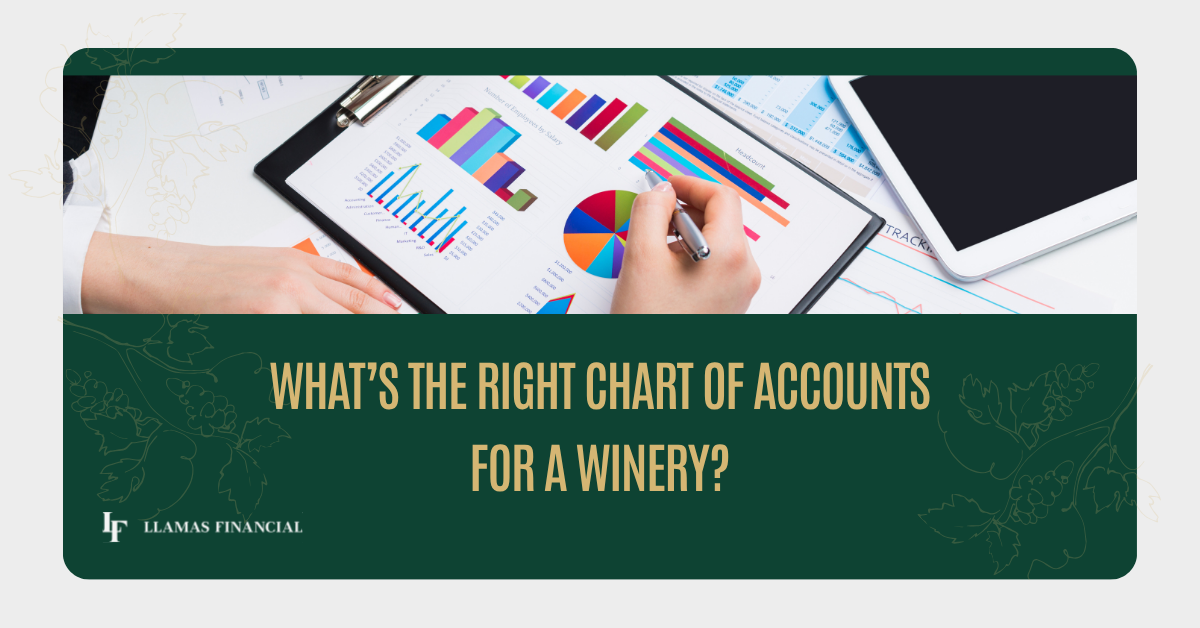
Wine production has long lead times, high upfront costs, and unique reporting requirements. That’s why having the right Chart of Accounts for a Winery is essential.
If your chart of accounts isn’t designed for a winery, you’ll struggle to understand where your money is going, how much it costs you to produce a case of wine, and whether your business is on track to be profitable.
Why a Winery Needs Its Own Chart of Accounts
A generic accountant might set you up with categories like Sales, Cost of Goods Sold, Rent, and Supplies. That might work for a small shop or a service business, but it won’t capture the complexity of vineyard operations, winemaking, and distribution.
Wineries need to separate farming costs from production costs, and production costs from selling costs. Without that clarity, you can’t answer basic questions like:
- How much does it cost me to produce a bottle of Chardonnay versus a bottle of Cabernet?
- Are my vineyard operations profitable on their own, or is my tasting room carrying the business?
- Which sales channel is bringing in the most margin: tasting room, wine club, or wholesale?
Your chart of accounts isn’t just about bookkeeping. It’s about structuring your financials so they tell a story you can use to make decisions.
Core Sections Every Winery Chart of Accounts Should Include
Here’s how we break it down when we build charts of accounts for our winery clients at Llamas Financial:
Vineyard Operations
This section captures the farming side of the business. Think vineyard labor, vineyard supplies, vineyard equipment, water, pest control, and vineyard rent or property taxes.
By separating vineyard costs, you can track what it truly costs to grow your grapes, whether you use them yourself or sell them to others.
Winemaking and Production
This is where you track everything that happens once grapes leave the vineyard. Common accounts include grapes purchased, crushing, fermentation, aging, barrels, bottling supplies, and production labor.
Bottling costs, for example, can vary widely depending on packaging choices. By isolating these expenses, you can make informed decisions about whether a new label design or bottle upgrade is worth the added expense.
Sales and Marketing
Tasting room payroll, wine club expenses, events, advertising, and distribution costs all fall here. This section helps you compare what you’re spending to acquire and serve customers versus what you’re earning from them.
It’s especially critical for wineries that rely heavily on direct-to-consumer sales.
General and Administrative
This is the catch-all for overhead costs like insurance, accounting, office supplies, and utilities. It’s easy for wineries to lump too much into this category.
When that happens, your P&L gets muddy and you lose visibility into what’s really happening in your vineyard or cellar.
We’ve Made It Easy For You
The truth is, creating a winery-specific chart of accounts from scratch can feel overwhelming. That’s why we’ve built a ready-to-go Chart of Accounts Template designed specifically for wineries. It includes all the categories you need — vineyard, cellar, tasting room, distribution, and overhead — already mapped out.
Instead of guessing which accounts to add or relying on a generic setup that doesn’t fit your operations, you can start with a framework that’s proven to work for wineries. Then, we customize it to fit your business model, whether you’re focused on direct-to-consumer sales, wholesale, or a mix of both.
This makes it easy for you to get clarity right away. No wasted time, no messy trial-and-error. Just a financial system that helps you track costs per case, monitor your margins, and prepare accurate reports from the start.
Avoiding Common Mistakes
One of the biggest mistakes we see wineries make is lumping everything into Cost of Goods Sold without separating vineyard, production, and overhead. The result is a financial statement that’s technically correct but practically useless.
Another common error is treating all labor as one category. Vineyard workers, cellar hands, and tasting room staff serve very different functions and should be tracked separately.
Another pitfall is using a chart of accounts designed for a retail business. Wine sales aren’t just retail. You may sell through a tasting room, a wine club, wholesale distributors, and direct-to-consumer shipping. If your chart of accounts doesn’t allow you to track revenue streams separately, you won’t know which channel is performing best.
How a Winery-Specific Accountant Can Help
Even with a template, it helps to have a winery-focused accountant fine-tune your chart of accounts for your specific goals.
At Llamas Financial, we don’t just hand you a chart of accounts — we walk through your operations with you and make sure your financial system matches your production process, your sales channels, and your growth plans. That way, your books aren’t just clean. They’re useful.
Takeaway
The right chart of accounts is the foundation of sound winery accounting. With our winery-specific template, you don’t have to reinvent the wheel or risk setting things up wrong. You can get started with confidence, knowing your numbers will be clear and decision-ready.
At Llamas Financial, we’ve made it easy for you. We’ll set up your chart of accounts, tailor it to your business, and give you the clarity you need to grow your winery with confidence.
Ready to get started? Schedule an introductory call, and we’ll reach out right away to connect.

As the winery accountants behind operators across Napa and beyond, this is the kind of work we do every day.
Getting the chart of accounts right at the start saves years of cleanup later. Our winery bookkeeping services include initial setup of a production-aware COA, monthly reconciliation, and the clean close that makes everything else (tax, CFO, lender reporting) possible.